


At the office of Tanglewood Family Dentistry, we approach extractions with the same focus on comfort, clear communication, and clinical precision that guides all our care. Removing a tooth is never the first option we choose; instead, it is a carefully considered decision made to protect your mouth and overall health when other treatments are not in the patient's best interest.
There are times when preserving a tooth does more harm than good—persistent infection, structural failure, or developmental issues can make removal the safest path. Our team balances conservative dentistry with decisive action, aiming to maintain function and appearance while reducing the risk of complications down the road.
Before recommending an extraction, we review your complete medical and dental history, take appropriate diagnostic images, and explain the alternatives and expected outcomes. This ensures you understand why removal is suggested and what to expect during the process and recovery.
Primary (baby) teeth that aren’t falling out on schedule or are badly decayed
Most children lose primary teeth as permanent teeth begin to erupt. Occasionally a baby tooth remains firmly attached due to delayed root resorption or ankylosis (fusion to the jawbone). When an over-retained primary tooth interferes with normal development, extraction may be recommended to allow the permanent tooth to come in properly.
Permanent teeth with extensive decay that can’t be restored
Tooth decay progresses from the outer enamel inward. When decay advances to the point that there’s insufficient remaining tooth structure, or the tooth’s nerve and supporting structures are compromised, extraction is sometimes the most predictable route to prevent ongoing infection and pain.
Severely fractured or structurally compromised teeth
Teeth can chip or crack in many ways. If a fracture extends below the gumline or interrupts the root in a way that undermines long-term stability, removal may be necessary. Our team evaluates whether restoration is feasible and only recommends extraction when preservation would be detrimental to oral health.
Advanced periodontal (gum) disease affecting tooth support
When periodontal disease causes significant bone and soft tissue loss, teeth can become loose or nonfunctional. In advanced cases where the supporting structures cannot be rebuilt predictably, extracting the affected teeth can halt the spread of disease and make room for restorative solutions.
Wisdom teeth that are impacted, decayed, or creating problems
Third molars are the last teeth to erupt and often lack space to come in straight. Impacted or poorly positioned wisdom teeth can damage neighboring teeth, trap food, or develop infections. Early removal is commonly advised when these risks are present to avoid more complex problems later.
Extractions as part of orthodontic planning
In some orthodontic treatment plans, removing one or more permanent teeth creates the space needed to align the remaining teeth and establish a healthier, more functional bite. When recommended, extractions are coordinated closely with orthodontic providers to achieve balanced, stable results.

When an extraction is indicated, we begin with a thorough clinical assessment and a review of your medical history. This helps us identify any conditions or medications that might affect treatment—blood-thinning medications, certain medical implants, or systemic issues can change our approach. If needed, we coordinate with your physician to ensure safe care.
Diagnostic tools such as digital radiographs allow us to examine root anatomy, tooth position, and surrounding bone. This imaging informs whether a tooth can be removed through a straightforward technique or if a surgical approach will be required. We’ll discuss the plan with you, answer questions, and outline any pre-procedure instructions before you are brought back for treatment.
On the day of the procedure, we use local anesthesia to numb the area completely; for patients who feel anxious or prefer additional comfort, we offer options for dental sedation. Our objective is to provide an experience that minimizes discomfort while prioritizing safety and predictable results.
Throughout the procedure, we take care to be gentle with soft tissues and to preserve surrounding structures. Whether the extraction is simple or surgical, the team keeps you informed during each step and delivers clear post-operative guidance to support a smooth recovery.
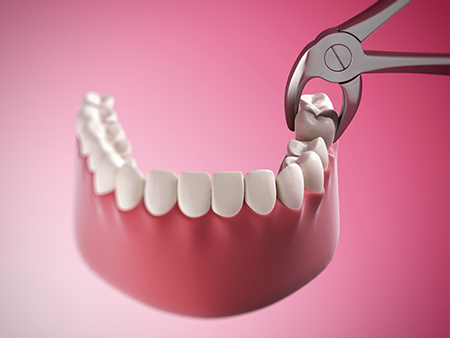
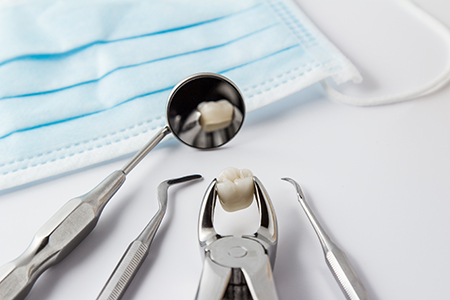
Simple extractions are used when the tooth is visible in the mouth and the roots are in a relatively predictable orientation. After achieving profound numbness with local anesthetic, the dentist loosens the tooth by detaching the periodontal ligament and then removes it using specialized forceps. The technique aims to remove the tooth intact while minimizing trauma to the socket and adjacent tissues.
Patients typically feel pressure but not pain during a simple extraction. If there is anxiety, we discuss supplemental options beforehand. In many cases a simple extraction is completed quickly, and recovery is straightforward when post-operative instructions are followed.
Surgical extractions are performed for teeth that are broken at the gumline, fused to bone (ankylosed), or impacted beneath the surface. This procedure may involve a small incision, the removal of some bone around the root, and careful sectioning of the tooth to facilitate removal. For complex cases we may refer to or collaborate with an oral and maxillofacial surgeon to ensure optimal outcomes.
Even with surgical extractions, local anesthesia is used, and sedation options are available when appropriate. We plan the intervention to control bleeding, limit swelling, and protect critical structures, then provide thorough aftercare instructions to support healing.
Healing after an extraction varies by procedure complexity and individual health. Our team provides tailored post-operative directions designed to reduce discomfort, support clot formation, and lower the risk of complications like infection or dry socket. Following these recommendations helps most patients recover quickly and return to normal activities.
Expect some swelling and mild soreness for a few days; these are normal parts of the healing process. We may recommend over-the-counter pain relievers or, in selected situations, prescribe medication to control discomfort. If sutures are placed, we will tell you whether they are self-dissolving or require a return visit for removal.
Nutrition and oral hygiene are important during recovery. A soft-food diet and plenty of fluids are encouraged in the first 24–48 hours, and gentle brushing away from the surgical site helps keep the mouth clean without disturbing the healing socket. We supply clear instructions for when it’s safe to resume normal brushing and rinsing routines.
Maintain gentle pressure with gauze
You will be given gauze to bite on immediately after the procedure. Keeping light pressure on the extraction site helps the blood clot form and slows any bleeding. Change the gauze as instructed and avoid vigorous spitting or rinsing during the first 24 hours.
Protect numb tissues
Until the local anesthetic wears off, take care not to bite or injure your lips, cheeks, or tongue. Numbness can persist for a few hours and increases the risk of accidental injury if you’re not cautious.
Follow medication instructions
Antibiotics:
If prescribed, take the full course exactly as directed to reduce the chance of infection.
Pain control:
Taking an appropriate pain reliever before the anesthetic completely wears off can help reduce discomfort. Use prescription medications only as directed and avoid combining them with alcohol.
Protect the healing clot
Do not rinse vigorously, use straws, or smoke during the initial healing period; these actions can dislodge the clot and delay healing or cause dry socket.
Manage swelling
Apply an ice pack to the outside of the face in short intervals during the first 24 hours to control swelling. Warm compresses can help later in the recovery process if needed.
Avoid tobacco
Smoking interferes with clot formation and soft tissue healing. Refrain from tobacco use for at least a week after the extraction when possible.
Choose gentle foods
Stick to soft, non-spicy foods for the first few days and avoid hot liquids until numbness and bleeding have subsided. Hydration is important throughout recovery.
Careful oral hygiene
Resume gentle brushing around the area as directed. After the first day or two, a mild saltwater rinse can help keep the site clean—avoid forceful swishing.
Attend follow-up visits
If sutures were placed or the case was complex, we will schedule a follow-up appointment to monitor healing. Keeping that visit allows us to address concerns early and confirm that recovery is progressing well.
If you experience persistent bleeding, increasing pain, fever, or any concerning symptoms, contact our office so we can evaluate and intervene if needed.
Our goal is to deliver extractions with the least amount of discomfort and the best long-term outcome for your smile. We use modern techniques, sterile protocols, and careful planning to reduce risks and encourage predictable healing. When tooth replacement is needed after extraction, we review options such as dentures, fixed bridges, and dental implants so you can choose what best fits your needs and goals.
We work to make every step of care transparent and simple to follow, from the initial consultation through recovery and any restorative work that may follow. Clear instructions, attentive follow-up, and a team that answers questions promptly help patients feel confident and supported throughout the process.
In summary, tooth extraction is a common, safe procedure when performed with careful diagnosis and technique. If you’d like to learn more about when extraction might be recommended or what the recovery looks like in your specific case, please contact us for more information.
The most common reasons for tooth loss include advanced periodontal disease, extensive tooth decay, and facial trauma. According to statistics, gum disease is responsible for close to 70% of tooth loss in adults. Although less frequent than the preceding three reasons, it should also be noted that specific diseases, drugs, smoking, and poor nutrition contribute to the risk of tooth loss.
The Centers for Disease Control and Prevention report that in the United States, an average of 12 teeth (including the wisdom teeth) are lost by the age of 50. Also, 26% of adults between 65 and 74 years of age have lost all their teeth.
Every patient and every situation is different. However, when a tooth and the surrounding tissues are numbed with a local anesthetic, you should only expect to feel a bit of pressure, but no pain as the tooth is being loosened from the surrounding tissues and extracted. For patients who are apprehensive and for some surgical extractions, our office will discuss our options in dental sedation to provide further relaxation and reduce any sense of discomfort.
While it's normal to feel some tenderness and swelling following an extraction, the degree of these sensations can vary. It mostly depends on the complexity of the extraction and the body's response to the procedure. We'll recommend or prescribe the appropriate pain medication to help ensure your comfort and give you specific instructions for maximum effectiveness and safety.
Typically, the recovery period following a simple extraction is shorter than a surgical extraction. However, a patient's overall health, habits, the size and location of the tooth, and other variables can influence recovery and healing. To speed up the recovery and avoid any complications, patients must follow the given at-home instructions diligently. We'll carefully review what to expect following your procedure and go over your post-op instructions.
Smoking interferes with blood clot formation, which is an essential first step in the healing process. Blood clot formation not only provides a protective layer to cover the underlying exposed bone and nerve endings, but it also supports the growth of new tissue. Cigarette smoke also contains chemical toxins that can disrupt the healing process and lead to problems such as continued inflammation, infection, or dry socket.
In a very small percentage of cases, a condition known as dry socket can develop in the aftermath of a dental extraction. This painful condition can arise when the blood clot in the extraction site doesn't form properly or gets dislodged. With dry socket, you may experience throbbing pain and symptoms such as bad breath and an unpleasant taste in your mouth. As skilled providers of care, our office will provide immediate treatment to alleviate your discomfort and promote healing.
The last teeth in your mouth to develop, wisdom teeth often do not have enough room to fully erupt or may be positioned in the wrong direction. These issues can affect your dental health as well as overall wellbeing. While some individuals never develop all their wisdom teeth, and a few have sufficient space for them, there are many people with partially or fully impacted third molars. Our office will monitor the development, position, and health of your wisdom teeth and will advise you if and when extractions are indicated.
After a tooth is removed, bone-grafting material is sometimes placed in the socket to promote healing and encourage new bone development. This procedure is often performed to support the eventual and successful placement of a dental implant.
At the office of Tanglewood Family Dentistry, we strive to make dental care affordable and accessible. Depending on the type or complexity of the extraction and other variables, the cost of the procedure can vary. Based on our diagnostic findings, our office will inform you of the healthiest choices in care, explain the fees, discuss insurance coverage, and explain your payment options.
Many dental plans offer some level of coverage for tooth extractions. We'll advise you if your plan covers the full cost of the procedure and if there is any out-of-pocket expense. Our business office will work with you to maximize your insurance benefits as much as possible while helping you minimize any out-of-pocket expenses.
Tooth extraction becomes necessary when preserving the tooth would do more harm than good to the surrounding teeth, gums, or overall health. Common indications include advanced decay that cannot be reliably restored, severe structural fractures, persistent infection that does not respond to treatment, or significant periodontal disease that has destroyed supporting bone. In some cases extractions are also recommended as part of orthodontic planning or to allow proper eruption of permanent teeth.
Before recommending removal, we perform a comprehensive evaluation that includes a review of your medical history and diagnostic imaging to understand root anatomy and bone support. This diagnostic process helps determine whether a tooth can be saved with restorative or endodontic treatment or whether extraction is the safer, more predictable option. At the office of Tanglewood Family Dentistry we emphasize conservative care but act decisively when extraction is in the patient’s best interest.
The distinction between a simple and a surgical extraction is based on how accessible the tooth and roots are within the mouth. A simple extraction is used when the visible crown can be grasped and removed with forceps after effective local anesthesia, while a surgical extraction is planned for teeth that are broken at the gumline, impacted, ankylosed, or have complex root anatomy. Imaging and intraoral examination guide this determination so we can plan the safest approach.
Surgical extractions may involve a small incision, removal of a portion of bone, or sectioning of the tooth to facilitate removal with minimal trauma to surrounding structures. When cases are especially complex we collaborate with or refer to an oral and maxillofacial surgeon to ensure optimal outcomes. Regardless of technique, the goal is to remove the tooth while preserving as much healthy tissue as possible to support uncomplicated healing.
Local anesthesia is the foundation of comfort for most extractions and numbs the procedure area so patients feel pressure but not pain. For patients with dental anxiety, lengthy procedures, or special medical needs, additional options such as nitrous oxide (laughing gas) or oral or IV sedation may be recommended to enhance comfort and reduce stress. The choice of sedation is tailored to the patient’s health history, anxiety level, and the complexity of the extraction.
We review medical history and current medications before selecting a sedation plan and provide clear pre- and post-procedure instructions to maintain safety. When sedation is used, a responsible adult should accompany the patient to and from the appointment and remain available during recovery as directed. Our team monitors patients closely throughout the procedure to ensure safe, effective pain and anxiety control.
Preparation starts with a thorough review of your medical history and a list of current medications, particularly blood thinners or other drugs that affect bleeding and healing. Follow any specific preoperative instructions we provide, such as fasting guidelines for certain sedative options or adjustments to medications only after physician consultation. Bringing a list of questions and arranging transportation if sedation will be used helps the visit run smoothly.
Wear comfortable clothing and avoid heavy makeup or jewelry that might interfere with monitoring devices if sedation is planned. If you have a medical condition or implant that requires antibiotic prophylaxis or physician coordination, inform our team in advance so we can take appropriate precautions. Clear communication and adherence to pre-procedure directions reduce risk and support a predictable experience.
Recovery varies by procedure complexity and individual health, but many patients experience mild to moderate discomfort and some swelling for the first few days. Following post-operative instructions—such as applying gentle pressure with gauze to control bleeding, using ice to limit swelling, and avoiding actions that dislodge the clot—promotes faster healing and reduces complications. Most routine extractions heal within one to two weeks, with the socket gradually filling in and soft tissues returning to normal.
Eat soft, non-spicy foods and stay well hydrated during the initial healing phase, and avoid smoking or using straws which can disturb the healing clot. We provide guidance on when to resume normal oral hygiene and whether sutures need removal or will dissolve on their own. If you notice persistent bleeding, increasing pain, fever, or other concerning symptoms, contact our office so we can assess and intervene promptly.
Dry socket, or alveolar osteitis, occurs when the protective blood clot in the extraction socket is dislodged or dissolves prematurely, exposing bone and nerve endings and causing significant pain. It is more common after difficult extractions and in patients who smoke or use oral contraceptives, but it can occur in otherwise healthy individuals. Preventive measures include careful post-operative instructions to avoid actions that could disturb the clot and good oral hygiene tailored to the healing phase.
If dry socket develops, treatment focuses on pain control, protecting the exposed bone, and promoting healing, often by placing a medicated dressing in the socket and providing analgesics. We also review oral care steps and may prescribe antibiotics if there are signs of infection. Prompt follow-up allows us to manage symptoms effectively and monitor recovery until the socket heals.
Antibiotics are not routinely prescribed for every extraction but may be recommended when there is an active infection, significant medical risk factors, or during complex surgical procedures where infection risk is higher. Pain management typically begins with over-the-counter analgesics for many routine cases, while prescription-strength medications may be provided for more extensive procedures or patient-specific pain needs. We always tailor medication recommendations to your medical history, current medications, and the complexity of the extraction.
When antibiotics are prescribed it is important to complete the full course exactly as directed to reduce the chance of persistent or spreading infection. For pain control, follow dosing instructions carefully and avoid combining prescription medications with alcohol or sedatives unless cleared by the prescribing clinician. If pain or other symptoms escalate rather than improve, contact our office so we can reassess your recovery plan.
Wisdom teeth, or third molars, often present unique challenges because they erupt later and may lack sufficient space, become impacted, or sit at awkward angles. These factors can necessitate surgical extraction more frequently than with other teeth, involving incisions, bone removal, or sectioning of the tooth for safe removal. Preoperative imaging is especially important for wisdom teeth to evaluate proximity to nerves and sinuses and to plan the safest surgical approach.
Because wisdom tooth procedures can be more invasive, recovery may include a higher degree of swelling and a longer healing timeline compared with simple extractions. We discuss anesthesia and sedation options, potential risks, and realistic recovery expectations before treatment, and provide detailed aftercare instructions to support uncomplicated healing. When risks are elevated due to anatomy or medical history, we may coordinate care with an oral surgeon to optimize safety.
A primary tooth may require extraction if it is severely decayed, causing infection or pain, or if it fails to exfoliate on schedule and interferes with the eruption of the permanent tooth. Other reasons include trauma that leaves the baby tooth nonrestorable or ankylosis where the tooth is fused to the bone and obstructs normal jaw and tooth development. Extraction decisions for children are made with attention to growth, orthodontic implications, and emotional comfort.
When extraction is indicated for a child, we use age-appropriate communication, behavior management techniques, and suitable anesthesia or sedation to ensure a positive experience. Coordination with parents and, when applicable, orthodontists helps ensure the timing of extraction supports healthy dental development. Follow-up care includes guidance on nutrition, oral hygiene, and monitoring the eruption of the permanent tooth.
Tooth replacement options depend on the number and location of missing teeth, the condition of adjacent teeth, bone quality, and the patient’s overall health and goals. Common solutions include removable prosthetics such as partial dentures, fixed bridges that rely on adjacent teeth for support, and dental implants that replace the root and provide a stable foundation for a crown or restoration. Each option has advantages and limitations that we discuss during treatment planning to match function, aesthetics, and long-term prognosis.
When planning restorative treatment after extraction, timing is important because bone resorption occurs after tooth loss; in many cases we recommend timely evaluation for implants or bone preservation techniques to maximize future options. Our team explains the sequence of restorative care, potential need for grafting, and the expected timeline so patients can make informed choices about replacing missing teeth. At Tanglewood Family Dentistry we prioritize predictable outcomes and help patients select the solution that best supports their oral health and lifestyle.
Quick Links
