


Tooth loss affects many adults at some point, and its impact goes beyond a gap in the smile. Missing teeth can change how you bite, make chewing less efficient, and, over time, allow the jawbone to shrink where teeth once provided stimulation. Replacing lost teeth restores not only appearance but also the function and health of the entire mouth. Modern implant dentistry focuses on rebuilding a stable foundation that supports natural-looking replacement teeth while protecting surrounding structures.
Dental implants are engineered to act like natural tooth roots, giving replacement teeth the support they need to feel and perform like the real thing. With advances in materials and planning technology, clinicians can place implants with a high degree of predictability. That stability means patients can eat comfortably, speak clearly, and smile with confidence—outcomes that improve daily life as well as long-term oral health.
At Tanglewood Family Dentistry, we emphasize careful evaluation and individualized plans so each patient receives the approach best suited to their anatomy and goals. Whether a single tooth has been lost to trauma or many teeth are missing due to disease, implants offer a way to rebuild a balanced, resilient smile that lasts.

A dental implant is a small, biocompatible post—usually made from titanium or a titanium alloy—designed to be placed into the jawbone where a tooth is missing. Over several months the surrounding bone fuses to the implant in a process called osseointegration. Once this bond forms, the implant becomes a stable anchor for a crown, bridge, or denture, effectively restoring the mechanical role of a natural tooth root.
The successful function of an implant depends on planning, surgical precision, and appropriate healing time. Diagnostic tools such as digital x-rays and 3D imaging help clinicians assess bone volume, locate vital structures, and design the ideal position for each implant. This careful planning minimizes surprises and supports long-term success.
When placed and restored correctly, implants distribute chewing forces into the jaw the way natural teeth do. That stimulation helps preserve bone volume and facial contours—benefits that removable options cannot fully replicate.
One of the most immediate benefits of implant-supported restorations is improved function. Because implants are anchored in the jaw, they provide a secure platform for chewing and speaking. Patients often describe greater confidence eating a wider variety of foods and feeling less self-conscious in social situations. Unlike some removable options, implants do not shift or slip during normal activities.
Beyond daily convenience, implants contribute to healthier oral anatomy. By replacing the root portion of a tooth, implants provide the mechanical stimulus the bone needs to maintain its volume. Preserving bone helps maintain facial structure and can prevent the sunken appearance that sometimes follows tooth loss. Over time, this structural preservation becomes an important factor in overall oral health.
Implants are also durable when maintained with good oral hygiene and routine dental care. They do not develop cavities, and many implant-supported restorations can last for many years. That reliability makes them an attractive option for patients seeking a long-term solution rather than a short-term fix.
Implant dentistry is versatile: one system can support a single crown, a multi-tooth bridge, or even a full set of replacement teeth. The choice depends on how many teeth are missing, the quality and quantity of the jawbone, and the patient’s goals. A focused exam and imaging help determine the least invasive, most durable plan for restoring function and aesthetics.
For a single missing tooth, an implant crowned with a ceramic restoration often provides the most natural result while preserving adjacent teeth. When several adjacent teeth are missing, implant-supported bridges can restore continuity without sacrificing healthy neighboring teeth. For patients missing an entire arch, fixed implant bridges or full-arch solutions recreate a secure, non-removable dentition that closely mimics the feel of natural teeth.
There are also implant-retained overdentures that attach to a small number of implants. These offer improved retention and comfort compared with traditional removable dentures while remaining easier to maintain in some cases. Each option has trade-offs, and a personalized discussion will identify which approach aligns with a patient’s lifestyle and oral condition.
Becoming an implant candidate begins with a comprehensive assessment. That includes a review of medical and dental history, clinical examination, and imaging to evaluate bone levels and anatomical considerations. Health conditions and medications can affect healing, so those factors are part of the treatment plan. When additional procedures—such as bone grafting—are needed, they are carefully integrated into a staged approach to build the best foundation for implants.
Implant placement is typically performed as an outpatient procedure. For many patients it is a straightforward in-office surgery with local anesthesia; sedation options are available for those who prefer additional relaxation. After placement, implants require time to integrate with the bone. During this healing phase the clinician monitors progress and plans the timing for the final restorative phase so that both function and aesthetics are optimized.
Occasionally a bone graft is necessary when bone volume has been lost due to previous extractions, periodontal disease, or long-term tooth loss. Grafting rebuilds the volume needed for stable implant placement and can be performed before or at the time of implant surgery, depending on the clinical situation. With modern grafting techniques and materials, predictable augmentation enables many patients who once were considered poor candidates to proceed with implants successfully.
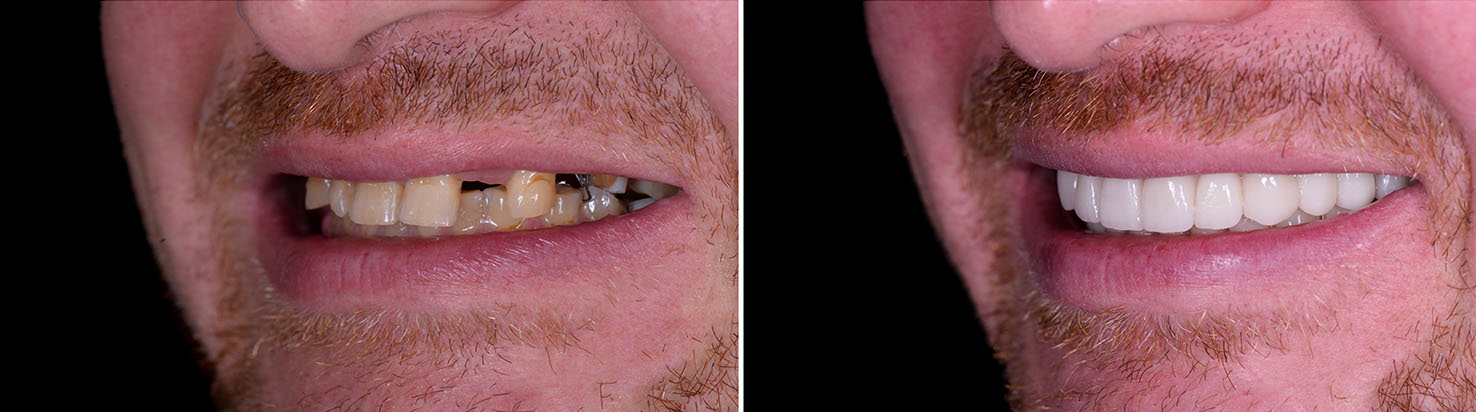
After implants are restored, routine care is straightforward: regular dental visits, professional cleanings, and consistent home hygiene keep implant sites healthy. While implants themselves do not decay, the surrounding gum tissue is vulnerable to inflammation if plaque accumulates. Detecting and addressing early signs of gum disease preserves the health of both implants and natural teeth.
When patients follow recommended guidelines—attending periodic checkups, maintaining oral hygiene, and addressing concerns early—implant systems can provide reliable service for many years. Clinicians also provide guidance on diet, habits such as smoking that can affect healing, and how to care for specific types of implant restorations so patients can protect their investment in oral health.
Dental implants restore more than a single tooth; they restore options—what you can eat, how you speak, and the confidence you carry every day. With careful planning and skilled care, implants provide a natural-looking, durable solution for many patients living with tooth loss. If you would like to learn whether implants may be a good choice for you, the office of Tanglewood Family Dentistry is happy to evaluate your smile, explain your options, and outline a clear path forward.
Contact us to discuss implant dentistry and take the next step toward a restored, healthy smile. Our team is available to answer questions and help you understand what to expect from consultation through long-term maintenance.
If you've lost a tooth due to injury, decay, gum disease, or any other reason, we recommend dental implants to replace missing teeth. Dental implants come the closest to replicating the look, feel, and function of your natural teeth.
Dental implants are placed into the jawbone and mirror the same function as the root of a tooth. The procedure for dental implants is usually performed while a patient is sedated. Patients who undergo IV sedation must have an empty stomach and transportation home following the procedure. Most sedation patients will have little to no memory of the procedure occurring.
Generally, dental implants are made out of a biocompatible metal such as titanium. Biocompatible metals are also used for other common bone implants (such as shoulder, hip, and knee replacements). The visible portion of the implant is usually made out of porcelain and is custom-made to match your existing teeth.
Dental implants are designed to fuse to the bone, which makes them become permanent fixtures. Typically speaking, the success rate is nearly 100%. There are few cases in which the implant will not fuse as intended and must be removed. If this happens to occur, the procedure can be attempted again a few months later.
Dental implants are not usually covered by dental insurance, but may be covered under a patient's medical insurance. Our office and your insurance company can discuss coverage options with you based on your individual case and treatment plan.
It's easy... just take care of an implant as if it's a natural tooth! This involves regular brushing, flossing, and dental checkups. If you have any concerns about your implant, contact us immediately.
Dental implants are biocompatible posts, most commonly made from titanium or titanium alloys, that are placed into the jawbone to replace the root portion of a missing tooth. They serve as stable anchors for crowns, bridges, or implant-supported dentures and are designed to integrate with the surrounding bone through a process called osseointegration. Because implants restore the mechanical function of a tooth root, they help support chewing, speaking and facial structure.
Implant-supported restorations are engineered to mimic the appearance and function of natural teeth while protecting adjacent healthy teeth from unnecessary alteration. Modern implant systems and restorative materials allow clinicians to recreate tooth shape, color and bite relationships for a natural result. Long-term success depends on careful planning, surgical technique and routine oral hygiene.
An implant replaces the root of a missing tooth by being surgically placed into the jawbone where it becomes integrated with bone tissue. Over a healing period the bone bonds to the implant surface, creating a stable foundation that can support a custom crown, bridge or denture. This integration allows the implant to transfer chewing forces into the jaw much like a natural tooth root.
Successful function requires precise planning and appropriate restorative design so forces are distributed correctly and surrounding tissues remain healthy. Diagnostic tools such as digital X-rays and three-dimensional imaging are commonly used to identify optimal implant position and angle. Once restored, the implant and its prosthetic are maintained with routine dental care to preserve long-term stability.
Candidates for dental implants typically have good general health and sufficient jawbone volume to support an implant, along with healthy gum tissue free of active infection. A comprehensive evaluation, including medical and dental history, clinical exam and imaging, helps determine whether implants are appropriate or if preparatory procedures are needed. Certain systemic conditions and medications can affect healing, and these factors are considered when developing a treatment plan.
Age alone is not a barrier to implants; rather, clinicians focus on bone quality, oral hygiene habits and overall health status. Smokers and people with uncontrolled periodontal disease may require additional care or behavior changes to improve healing prospects. If bone volume is insufficient, bone grafting or other augmentation techniques can often make implant therapy possible.
Planning implant treatment commonly involves digital X-rays and three-dimensional cone-beam CT (CBCT) imaging to evaluate bone volume, density and the location of vital structures such as nerves and sinuses. These images allow clinicians to map ideal implant positions, select appropriate implant sizes and anticipate whether augmentation will be necessary. Digital planning reduces surprises during surgery and supports predictable restorative outcomes.
In many cases the treatment plan is developed using implant planning software that integrates imaging with digital impressions or models of the teeth. This workflow helps align surgical placement with the final prosthetic design so the implant supports proper function and esthetics. Clear communication between restorative and surgical teams ensures that both surgical and prosthetic needs are addressed in advance.
Implant dentistry offers a range of restorative options including single-tooth crowns, implant-supported bridges, full-arch fixed restorations and implant-retained overdentures. The choice depends on how many teeth are missing, the quality and quantity of jawbone, and the patient’s functional and esthetic goals. Each option balances invasiveness, maintenance needs and long-term support differently.
Single-tooth implants replace an individual tooth without altering neighboring teeth, while implant-supported bridges can span multiple missing teeth using fewer implants than teeth replaced. Full-arch fixed solutions recreate an entire upper or lower dentition and are designed for non-removable function, whereas overdentures attach to a small number of implants for improved retention with removable convenience. A personalized consultation helps identify which approach best fits a patient’s lifestyle and oral condition.
The implant process begins with a comprehensive consultation that includes medical and dental history, clinical examination and imaging to create a tailored treatment plan. When necessary, preparatory procedures such as tooth extraction or bone grafting may be performed before implant placement to ensure a stable foundation. Implant placement is usually an outpatient procedure performed under local anesthesia, with sedation options available for comfort.
After placement, a healing period allows osseointegration to occur; the timing varies by case but typically ranges from a few weeks to several months. Once integration is confirmed, the clinician will attach an abutment and fabricate the final prosthetic restoration to match surrounding teeth and bite relationships. Regular follow-up visits at Tanglewood Family Dentistry ensure the restoration functions well and the tissues remain healthy.
Bone grafting is recommended when there is insufficient jawbone volume or quality to securely place an implant, which can result from long-term tooth loss, periodontal disease or trauma. Grafting rebuilds the ridge using the patient’s own bone, donor materials or synthetic substitutes to create a stable site for implant placement. The procedure may be performed as a separate stage before implant surgery or at the time of placement, depending on clinical needs.
Healing after grafting requires time for new bone to form and integrate with the host site; this period varies with the graft type and individual healing response. Modern grafting techniques and materials have improved predictability, allowing many patients previously considered poor candidates to proceed with implant therapy. Your clinician will explain expected timelines and care instructions to support successful augmentation.
Long-term care for dental implants focuses on daily oral hygiene, regular professional cleanings and routine dental examinations to monitor soft tissues and prosthetic components. Brushing twice daily, cleaning between teeth with floss or interdental brushes and attending scheduled checkups help prevent plaque accumulation and gum inflammation around implants. Because implants themselves do not decay, maintaining healthy surrounding gums is essential to preserve implant stability.
Dental professionals may recommend specific cleaning tools or techniques tailored to the type of restoration, such as care for fixed bridges versus removable overdentures. Periodic assessments allow clinicians to detect early signs of tissue changes and address them promptly to minimize complications. Consistent preventive care supports the longevity of implant restorations and the overall health of the mouth.
As with any surgical procedure, implant treatment carries potential risks such as infection, delayed healing, nerve irritation and, in rare cases, implant failure. Proper case selection, meticulous surgical technique and adherence to postoperative instructions reduce these risks significantly. Diagnostic imaging and careful planning also minimize the chance of damaging adjacent anatomical structures.
Long-term complications can include peri-implant mucositis or peri-implantitis, which are inflammatory conditions of the soft tissues and bone around implants if plaque control is inadequate. Early detection through regular dental visits allows for non-surgical or surgical interventions to manage tissue inflammation before it compromises the implant. Open communication with your dental team about symptoms such as pain, swelling or changes in function helps ensure timely evaluation.
Following implant surgery most patients experience some swelling, mild discomfort and minor bleeding that typically resolve within a few days to a week with appropriate care. Clinicians provide postoperative instructions on oral hygiene, diet and activity restrictions to support healing and reduce the risk of complications. Prescription or over-the-counter medications may be recommended to manage pain and inflammation as needed.
The critical healing phase for osseointegration can take several weeks to a few months depending on the clinical situation and bone quality, and clinicians will schedule follow-up visits to monitor progress. Once integration is confirmed, the restorative phase begins with abutment placement and fabrication of the final prosthesis. For personalized guidance and to review your specific timeline, contact the office of Tanglewood Family Dentistry in Clemmons, NC to arrange an evaluation.
Quick Links
